INSPIRATION

I first became aware of Carol P. Christ while searching for answers about the people who erected the stone monuments scattered about Brittany and the United Kingdom. I was researching Marija Gimbutas, the Lithuanian archaeologist and anthropologist known for her research into the Neolithic cultures of “Old Europe”. Carol had invited Dr. Gimbutas to speak at the San Jose State University where she taught feminism. Carol was later invited to speak at Marija Gimbutas’ memorial.

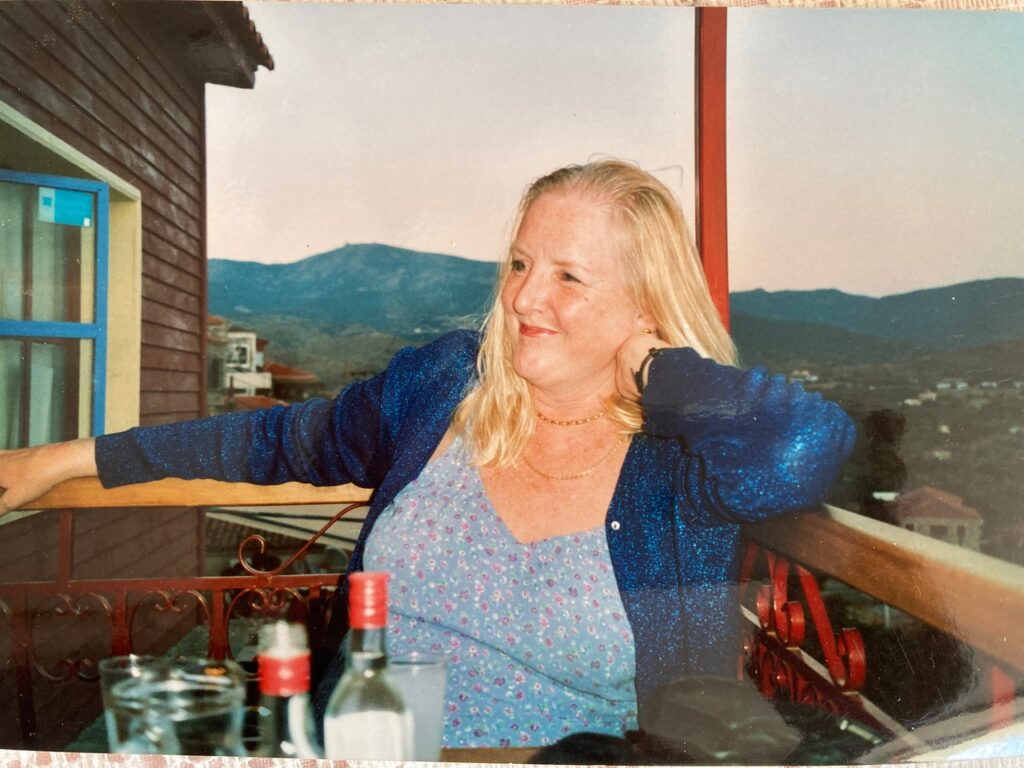
            It wasn’t until the fall of 2019 that I talked to Carol over FaceTime. Unfortunately, I never met her in person. I was on Belle-île-en-Mer at that time and planned on attending the Goddess Pilgrimage to Crete before I left Europe. I worried that the ad for the tour was fraudulent, and I wanted to meet with Carol before sending $5000.  As Ryan Air flights in Europe are reasonably priced, I emailed Carol and asked if I could meet her for coffee in Crete. Carol emailed back and said that she didn’t live on Crete, but on the Greek island of Lesbos. I asked if I could fly into Athens and meet her for coffee, but she said the ferry ride from Athens was 9 hours and it wasn’t worth it. I offered to fly into Athens and take the ferry to Lesbos, but she said I wouldn’t like Lesbos. That is when I decided I was corresponding with a fraud, and I changed my plans. I booked La Petite Sirène hotel on Quiberon for two weeks and decided to fly back to Dublin a week early and take pictures of stones with etchings on them at the Bend in the Boyne. A few days later, Carol contacted me and said she would Facetime me. That is when I learned she was who she said she was, but by that time I couldn’t cancel my hotel booking in Quiberon, so as disappointed as I was, I decided to take part in the Goddess Pilgrimage the next year. I never made it but did contact Carol many times about questions I had about the Goddess worshiping culture of Old Europe.

Carol’s house has four windows on the second floor.

            Carol’s blog posts were never boring. She spoke of the stunningly beautiful island of Lesbos where she lived an idyllic life for twenty years, of the challenges of the influx of the refugees to the island, the balance between security, border management, and humanitarian obligations. I learned firsthand about the thousands of refugees fleeing wars in Syria, Iraq, and Afghanistan who landed on Lesbos. They began to arrive on the shores of her Greek island in numbers of over a thousand a day by the late summer of 2015. Carol describes how witnessing human suffering traumatized the people of her village and helped her decide to move to Crete.

            I was most interested in Carol’s blogs. Among other things, she wrote of the fear of the Goddess, and how it drove academic skepticism of Gimbutas’ interpretations of the peaceful goddess worshiping culture that occupied Old Europe. 

            Carol used her blog to explain how history needs to be rewritten to help women recognize their long, influential history by uncovering the  prehistoric matrifocal cultures. 

            Carol died of cancer in Heraklion, Crete on July 14, 2021. 

THE AWAKENING

The making of my new book has been a long journey. It was the fall of 2012 when I first visited Carnac and the Kercado triangle and passage chamber. That’s when I first realized that stone age people were not the stupid harry brutes that I was led to believe. These ancient people knew about the Pythagorean triangle back six thousand years ago! Did Pythagoras visit Carnac? Is that where he found out about the ratio of the sides of a right-angled triangle? Was information lost and rediscovered?

That visit in 2012 started me questioning the whole concept that we, as a people, are growing more intelligent, and that this intelligence is just now burgeoning. 

            How and why did the ancients align over 300 granite standing stones in rows at Carnac and the surrounding district? Why are we fed the nonsensical explanation that a pagan army was pursuing Saint Cornelius and when he reached the sea, either he or Merlin the Wizard turned the pursuing army into stone, creating the rows of megaliths. Is the Christian Church trying to cover up the truth, or do they think we are stupid? 

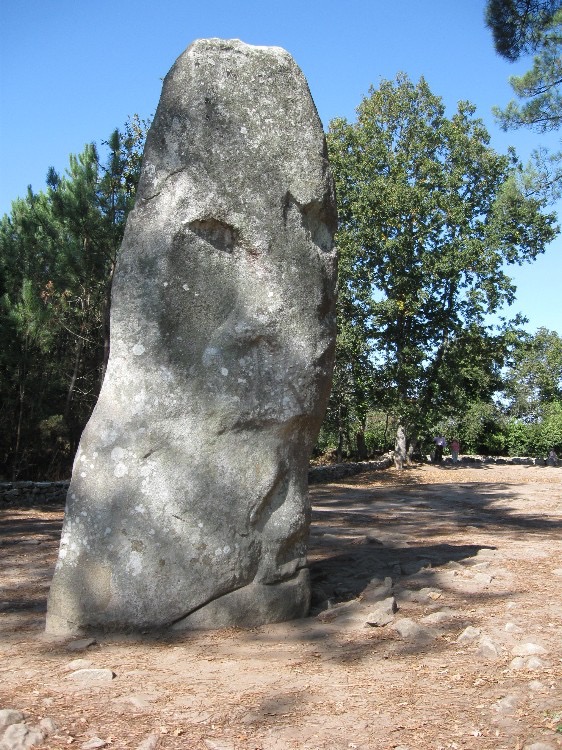
            And how and why did the ancient people erect the large stone, the Manio Giant, that stands over 21 feet near the quadrangle? How did the stone age people build Stonehenge and all the stone monuments scattered all over northwestern Europe? Why are we told that we should accept Stonehenge as a mystery and that we can never understand it? Why are the facts left in plain sight for us to see so heavily guarded and denied?

            It seems more credible to me that our ancient ancestors possessed knowledge and technology that is lost to us today and that we are just now rediscovering a small part of it. 

            I set out fourteen years ago to try to answer some of these questions. It seems that no matter how much I delve into the mysteries, there is much more research that can be done. But I must stop the research now and share the small bit I have come to uncover. So, I wrote a book of fiction that incorporates what seems to be a few basic necessities that allowed our ancestors to achieve such monumentous tasks. 

            First, these stone age people were peaceful. In order to be peaceful, their culture had to be equalitarian. There was no hierarchy unless it was merit based.

Land of the Watchers

I have just finished my new book of pre-historic fiction. The story is set in what is now Europe in the year 3150 BCE.

I have been researching this book since 2012. Originally, I tried to incorporate the non-fiction into the book by placing introductory chapters of non- fiction in front of each chapter of fiction, but that bogged the story line down, so I have now taken all the non-fiction out of the book.

However, since the culture I write about is so foreign to that of today’s world, I would like to offer my research as a companion book of non-fiction for those who might want to know what I based my view on. In the companion book, I will explain where I came up with the picture I uncovered of the people who built all the stone monuments scattered all over Great Britain and the northern part of Brittany.

Furthermore . . . what I uncovered from my travels across the region, talking to the locals, reading folklore and mythology at the neolithic sites I visited and listening to the echoes of the land is vastly different from what I was taught to believe.

I plan to write one chapter of the non-fiction book a month and put it on Substack free of charge.

Also, the plethora of etchings on the stones intrigued me. I am not a linguist and would love any help I can get to decipher the symbols.

My next post will be to put some symbols on the site and hope for some suggestions as to what they could mean.

Brief introductory description of the Stone Age people in my book

Five thousand years ago, in a time before Gilgamesh and the Great Flood, the continent now known as Europe was home to a primordial people who lived in peaceful partnership. They held a profound connection to the earth and shunned possessions over fellowship with each other.

They tilled the soil at Carnac, studied the heavens at Newgrange, sought healing and balance at Avebury and celebrated the celestial journey of the soul at Stonehenge.

They were farmers, skilled mariners, fishermen, master astronomers, expert architects, and stonemasons. They settled along coastlines and inland waterways and traveled the continent exchanging knowledge and goods.

They are the builders of the stone monuments scattered all over England, Scotland, Wales, Ireland, and Brittany.

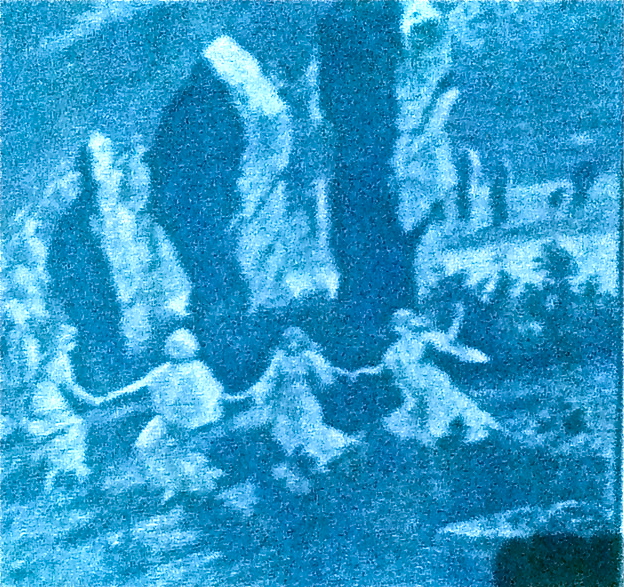
It was a time before Babel, a time of women’s councils and maidens dancing in meadows under a moonlit sky.

It was a time when the terms “witch” and “old hag” conveyed great honor, before the word “woman” reflected the modern belief that “women” are an adjunct of man.

It was a time when astronomers called ‘The Watchers’ roamed the land. The Watchers possessed a knowledge of physics and mathematics beyond that of today and used technology lost to us now. They moved twenty-ton stones like they were feathers, harnessed anti-magnetism, had flying suits, and built watertight stone structures aligned with great precision to the cosmos.

It was the time recorded in the Dead Sea Scrolls when Enoch was taken to Newgrange to learn how to reconstruct a crucial calendar that might be destroyed if the incoming comet should hit earth at the Bend in the Boinne.

The year is 3150 BCE, and the cluster of observatories at the Bend in the Boinne are fully operational. This advanced community, rich in mythology and folklore, teem with celebration, but the day my story begins, trouble lurks in paradise.

Goddess Pilgrimage to Crete

I am in the process of booking a two-week tour in Crete on a Goddess Pilgrimage led by Carol P. Christ. Carol has met Marija Gimbutas, the world’s foremost authority on Old Europe.

I based a lot of my vision of the people I am writing about on Marija’s archeological work and interpretation. Marija coined the phrase “Old Europe” to refer to a time from 7000 BCE to 1700 BCE_— approximately the time of the first farming societies in Europe and usually referred to as the stoneage. This is the time in Europe when the Neolithic peoples erected the megaliths and is the time period in which my book is set. Marija was unique in that she combined folklore with her archeological excavations when interpreting her findings. She characterized this culture as peaceful, matrilineal, goddess centered and agrarian, and she made a start at translating the pictographs of the region.

            Although my book is set in the Carnac/southeastern Ireland/southwestern England region, this culture occupied all of modern day Europe. In Crete, these “Old Europeans” were permitted to keep their culture for a longer period of time than the rest of Europe, and there are many well preserved archeological sites existing there. It is here that I hope to be able to stand inside the walls of a dwelling ruin and get the sense for the space and living habits of these ancient people. I also hope to learn the myth and folklore of the region and modern day practices as they reflect the origins of the place. This will help me form a clearer picture of the society thus enabling me to bring the society back to life in my book.

            The tour includes a visit to the Heraklion Archaeological Museum, Sacred Myrtle Tree, Tholos Tomb at Kamilari, Museum of Cretan Ethnology in Vori, Archeological Museum of Archanes, Skoteino Cave, archaeological site of Mochlos Island, ritual of the Labyrinth and many other caves, sacred sites, archaeological sites and museums.

            The tour will be the last leg of my exploration for my book as it takes place from September 29th to October 13. Which leads into the practical issue of time in Europe before needing a visa.

            I was under the impression that I could only stay in Europe for 3 months without a visa, but my sister-in-law put me on to the schengen. Greece is part of the schengen and so is France, but Ireland and England are not. Therefore I can spend time in the non-schengen countries before entering France. I just need to ensure I will be leaving Greece within 90 days of entering France.

            Today I will try to book the rest of my stay in Ireland.

Article in the Peninsula News Review by Steven Haywood

Sidney author sells everything for two-year book research trip
Writer and blogger Ruth Wellburn to explore Europe’s ancient standing stone sites.
STEVEN HEYWOODThu Apr 27th, 2017 ENTERTAINMENT
Sidney author Ruth Welburn at the standing stones at Carnac, France during a trip she took to the area a few years ago. She plans on returning there as part of her research for a new work of fiction. Submitted

Ruth Welburn has sold her home in Sidney, her car and is in the process of either storing or getting rid of many of her possessions.

For the local author, it’s all part of her long-term plan to research some of Europe’s prehistoric history for a new work of historical fiction. It has been a dream of hers to leave behind the shackles of day-to-day life and spend up to two years overseas, exploring and getting to know the local culture and folklore surrounding some of the most mysterious objects in the world.

Welburn, a writer and blogger and author of two books The Devil’s Ruse and children’s book Bed Bug’s Big Adventure, got the idea for her next tale while she was in Europe five years ago, touring the Way of St. James — or the Camino Trail. While she was in France, she stopped to see the village of Carnac in Brittany, the largest Neolithic site in the world, whose standing stones are older than those at Stonehenge, in England.

“I couldn’t believe what I saw,” she says. “Everything there is written in stone and it’s just amazing what they knew.”

That early knowledge of mathematics, the earth and the cosmos sparked in her imagination what life might have been like during the Neolithic era (3300 BC).

“I have spent the last five years trying to figure out who those people were and where they came from.”

Welburn said she’s done a lot of reading on the subject of Europe’s standing stones and the people who erected them. She said much of that history is a mystery. For her book — whose working title is The Land of Uriel — Wellburn said she plans to travel first to Ireland and visit Newgrange, a prehistoric monument. A large, circular mound with stone passageways and chambers, it dates back the neolithic as well and is also older than Stonehenge and the Egyptian pyramids.

Welburn’s travels will eventually take her across to England and Stonehenge, then over to France and Carnac, where she will spend the bulk of her time — about three weeks. Then, she said she plans on taking a ferry over the Belle Isle En Mer, not too far from Carnac, where she will spend a month writing. She said a little bit of isolation is what she needs to work on her story.

“That’s when I will write and formulate my words a little better.”

During her travels, Welburn said she plans to get to know the areas where these standing stones and Neolithic monuments were created. Immersing herself in the local culture and folklore, she said, will help add colour to her writing.

“When I had gone to walk a portion of the Camino, and visited Carnac, I felt there was something ancient in me that I wanted to discover.”

She hopes spending time there will tap into her unconscious and help bring together her experiences and the area’s history, into her new work.

“I really need to go and listen to the echos,” she said. “There’s something more out there than just what you see.”

Welburn added she will be using her blog — followthewriterblog.wordpress.com — to tap into people, stories and information about the Neolithic sites. She’s already been receiving advice about where to go in each of the countries she plans on visiting.

Welburn is looking at being on the road for 24 months in all, after leaving Sidney at the beginning of May. She will stop first in eastern Canada to visit her family. From there, it’s a solo journey to Dublin, Ireland and prehistoric sites beyond.

Will she return to the Saanich Peninsula when she’s done?

“I’m not sure,” she admits. “After two years, I’m not sure where I might land. Two years is as far ahead as I can think at the moment.”

I have begun my journey

            I have begun my journey. My house is sold, and I am now visiting my brother and sister-in-law in Wellington, Ontario as I make preparations for my trip to Europe to research my book.

           The experience is turning out to be even better than I expected with so many avenues to explore that I didn’t even realize were there. Many serendipitous things have happened along the way, but I will stay focused this morning on the plans for Europe and my research into the peaceful Neolithic people of Europe who left such a mystical legacy written in stone all over Europe. I am so excited about exploring it.

            After spending a short time in the Maritimes visiting family and friends, I will fly into Duplin on June 19. Here, I will visit the Boyne Valley region just northwest of Dublin. I plan to spend a week near Newgrange taking tours and exploring the region on my own. The area is a UNESCO heritage site. Besides the main attraction, the huge quartz passage chamber that predates Stonehenge and the pyramids, there are thirty-five other tombs and archeological sites throughout the region. Although the main passage chamber is aligned with the rising winter solstice sun, there is a smaller one called Summer Solstice Townleyhall passage tomb located just north or the large tombs at Newgrange, Knowth and Dowth. www.knowth.com/townleyhall.htm It is more basic in design than its bigger neighbours and only a few of the original stones remain, but it is still possible to see the alignment if the weather permits. I plan to be at Townleyhall for sunrise on June 21st. I will take loads of pictures and post them on my blog.

            Besides the Neolithic tombs of Newgrange, the Hill of Tara promises to be of great interest. It is one of Ireland’s best vestiges of Neolithic spiritualism.

            I have also booked a two-week Goddess pilgrimage in Crete for the end of my journey but I will post that in tomorrow’s blog.

Gallery

 A very warm welcome

            A very warm welcome. I invite you to join me as I pursue my quest to research and publish a book that has occupied my mind and soul for four years—a book I feel driven to write.

            Ever since my visit to the stone alignments at Carnac in Brittany, France, I have been captivated by the people who lived there thousands of years ago and their curious allure to megaliths. I have grown to identify with them to the point that I see the world through their eyes. For instance, I watched a movie the other day called The Queen of Katwae. It is touted as a “feel good movie” and is described as “a heroic struggle of a Ugandan girl who, with the help of a missionary, was able to escape the abject poverty of her community.” I was left thinking, not of the triumph for the girl but about the tragedy of the masses that did not escape. I was left reflecting on the culture that chains so many men, women and children into this Hell on earth, and contrasting the ancient European culture that was actually known as Heaven or the Garden of Eden.

            My research suggests the existence of a society of giants and luminaries who lived in peaceful partnership over thousands of years in what is now known as Europe—a way of life that has become lost and confused over time and only exists today in the lyrics of songs written by visionaries whose imagination somehow broke through the veil of darkness that has been reality for the past four millennia. I feel compelled to write of their extraordinary existence; I have for a long time envisioned “… a world with no war, …[of] people living for today…with nothing to kill or die for, …[having] no religion, …no possession, no countries, no need for greed or hunger—…a brotherhood of man… sharing all the world [and]…living in peace… [at a time [when] the world [was] as one.” (Phrases are taken from the John Lennon’s Imagine) That I serendipitously stumbled onto just such a culture dictates that I must rout out the truth and write about it.

            I have a dream—a dream to explore and understand those wise men  women of old and expose their secret. I have written a few chapters of my book, but I realize how much more work is needed to fully understand the magnificence of this ancient culture. I hope to spend five months in Europe of intense exploration.

            My search would begin in Paris where I would spend a week or two seeking out art that reflects European prehistory in the Musée d’Orsay and the Louvre .

            From Paris I would travel out to the Morbihan district of Brittany. Perhaps get an Airbnb for a month and walk or bike the many trails through the various pays of southern Brittany to immerse myself in the mystery of the ancient sites. I would scour bookstores, museums of prehistory, art galleries, the commune at Malansac, L’Archéoscope at Carnac, talk to local residents and listen for the ancient echoes of the peaceful countryside. Evenings would be spent reading and making notes.

            The next thirty days, I would like to spend in a Bed and Breakfast on the island of Belle Isle en Mer where I would spend early mornings writing. After breakfast, walks to the lighthouse and around the island’s craggy cliffs or along its beaches would provide time to reflect.

            From Brittany, I would travel to England to visit the Avebury henge monument in Wiltshire Dows, which is older and larger than Stonehenge. Then, across the Irish Sea for a month to explore the prehistory passage tombs at Newgrange in the Boyne Valley just northwest of Dublin and its sister sites at Knowth and Dowth. I am hoping to be there during Summer solstice. Newgrange is 500 years older than the Giza pyramid in Egypt and 1000 years more ancient than Stonehenge.

            Perhaps if there were any time left, I would return to Belle Isle en Mer to finish my book.

            My first task is to prepare for this journey. I have put my townhouse in Sidney, British Columbia on the market. This will free me up from the responsibility of owning a house and provide the funds needed to pursue my goal. I plan to liquidate all my belongings and for a while just travel and write.

            I not only invite you to follow me on my journey to research my book, but I invite you to join me on my quest for a greater understand of the people I write about and the world they lived in. I would very much like to hear from you if you have any advice or suggestions that could help me bring this period of history to life.

            A lot of my research was guided by advice from friends and family. One example is the tip I received from my granddaughter. Five years ago before I went to Europe on my journey of self-discovery, she told me about a place in France called the French Stonehenge. I followed up on that tip and later came to find out that it was called the Carnac Stones. This proved to be one of the most eye-opening parts of my trip.

            Another tip came from a good friend of mine who often critiques my work. As I wrote my first story about the people who erected the stones at Carnac, I gave it to him to read. Usually he is very supportive and positive about my work, but this time he adamantly opposed the very premise that there ever existed a culture of peace that lived in peaceful partnership for thousands of years in what is now known as Europe. He was not open for discussion on the topic and simply dismissed the idea as idealistic fantasy and discouraged me from pursuing such a novel. However, a few weeks later, he phoned to say he had been discussing my project with neighbors, and much to his surprise they said indeed such a culture did exist and recommended that I read Christopher Knight and Robert Lomas’s book, Uriel’s Machine. He also read the book, and although he did not receive it with the great enthusiasm that I did, it did open him up to the possibility that there was some truth to my discovery.

            Earlier, a member of our choir recommended that I read Riane Eisler’s book, The Chalice and the Blade.

            So you can see that these key tips along with the many smaller ones, have served to guide the research for my book.

            One purpose of my blog is to glean as much guidance as I can from anyone who follows me on my journey. It is my hope that you will be more than an observer. For anyone willing to do so, I invite you to be a part of the experience. I don’t really know a lot about the art world, and I would welcome advice on which artists would be a must see. Is there another venue in Paris or elsewhere that would enlighten and inspire me?

            I Look forward to hearing from you. Just click on the comments button.