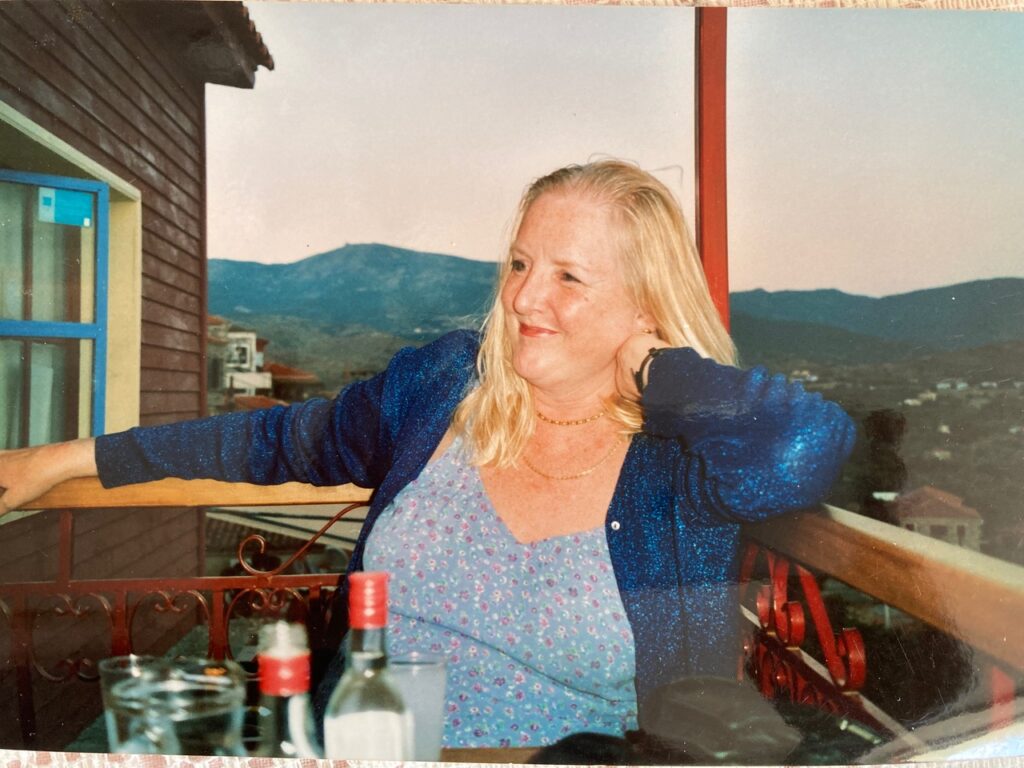
I first became aware of Carol P. Christ while searching for answers about the people who erected the stone monuments scattered about Brittany and the United Kingdom. I was researching Marija Gimbutas, the Lithuanian archaeologist and anthropologist known for her research into the Neolithic cultures of “Old Europe”. Carol had invited Dr. Gimbutas to speak at the San Jose State University where she taught feminism. Carol was later invited to speak at Marija Gimbutas’ memorial.
It wasn’t until the fall of 2019 that I talked to Carol over FaceTime. Unfortunately, I never met her in person. I was on Belle-île-en-Mer at that time and planned on attending the Goddess Pilgrimage to Crete before I left Europe. I worried that the ad for the tour was fraudulent, and I wanted to meet with Carol before sending $5000. As Ryan Air flights in Europe are reasonably priced, I emailed Carol and asked if I could meet her for coffee in Crete. Carol emailed back and said that she didn’t live on Crete, but on the Greek island of Lesbos. I asked if I could fly into Athens and meet her for coffee, but she said the ferry ride from Athens was 9 hours and it wasn’t worth it. I offered to fly into Athens and take the ferry to Lesbos, but she said I wouldn’t like Lesbos. That is when I decided I was corresponding with a fraud, and I changed my plans. I booked La Petite Sirène hotel on Quiberon for two weeks and decided to fly back to Dublin a week early and take pictures of stones with etchings on them at the Bend in the Boyne. A few days later, Carol contacted me and said she would Facetime me. That is when I learned she was who she said she was, but by that time I couldn’t cancel my hotel booking in Quiberon, so as disappointed as I was, I decided to take part in the Goddess Pilgrimage the next year. I never made it but did contact Carol many times about questions I had about the Goddess worshiping culture of Old Europe.
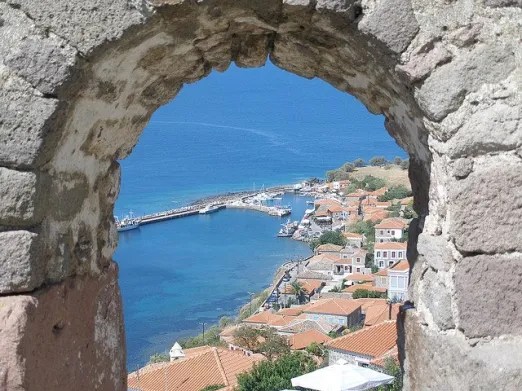
Carol’s blog posts were never boring. She spoke of the stunningly beautiful island of Lesbos where she lived an idyllic life for twenty years, of the challenges of the influx of the refugees to the island, the balance between security, border management, and humanitarian obligations. I learned firsthand about the thousands of refugees fleeing wars in Syria, Iraq, and Afghanistan who landed on Lesbos. They began to arrive on the shores of her Greek island in numbers of over a thousand a day by the late summer of 2015. Carol describes how witnessing human suffering traumatized the people of her village and helped her decide to move to Crete.
I was most interested in Carol’s blogs. Among other things, she wrote of the fear of the Goddess, and how it drove academic skepticism of Gimbutas’ interpretations of the peaceful goddess worshiping culture that occupied Old Europe.
Carol used her blog to explain how history needs to be rewritten to help women recognize their long, influential history by uncovering the prehistoric matrifocal cultures.
Carol died of cancer in Heraklion, Crete on July 14, 2021.
 Ruth Welburn
You must be logged in to post a comment.