I have just finished my new book of pre-historic fiction. The story is set in what is now Europe in the year 3150 BCE.
I have been researching this book since 2012. Originally, I tried to incorporate the non-fiction into the book by placing introductory chapters of non- fiction in front of each chapter of fiction, but that bogged the story line down, so I have now taken all the non-fiction out of the book.
However, since the culture I write about is so foreign to that of today’s world, I would like to offer my research as a companion book of non-fiction for those who might want to know what I based my view on. In the companion book, I will explain where I came up with the picture I uncovered of the people who built all the stone monuments scattered all over Great Britain and the northern part of Brittany.
Furthermore . . . what I uncovered from my travels across the region, talking to the locals, reading folklore and mythology at the neolithic sites I visited and listening to the echoes of the land is vastly different from what I was taught to believe.
I plan to write one chapter of the non-fiction book a month and put it on Substack free of charge.
Also, the plethora of etchings on the stones intrigued me. I am not a linguist and would love any help I can get to decipher the symbols.
My next post will be to put some symbols on the site and hope for some suggestions as to what they could mean.
Brief introductory description of the Stone Age people in my book
Five thousand years ago, in a time before Gilgamesh and the Great Flood, the continent now known as Europe was home to a primordial people who lived in peaceful partnership. They held a profound connection to the earth and shunned possessions over fellowship with each other.
They tilled the soil at Carnac, studied the heavens at Newgrange, sought healing and balance at Avebury and celebrated the celestial journey of the soul at Stonehenge.
They were farmers, skilled mariners, fishermen, master astronomers, expert architects, and stonemasons. They settled along coastlines and inland waterways and traveled the continent exchanging knowledge and goods.
They are the builders of the stone monuments scattered all over England, Scotland, Wales, Ireland, and Brittany.
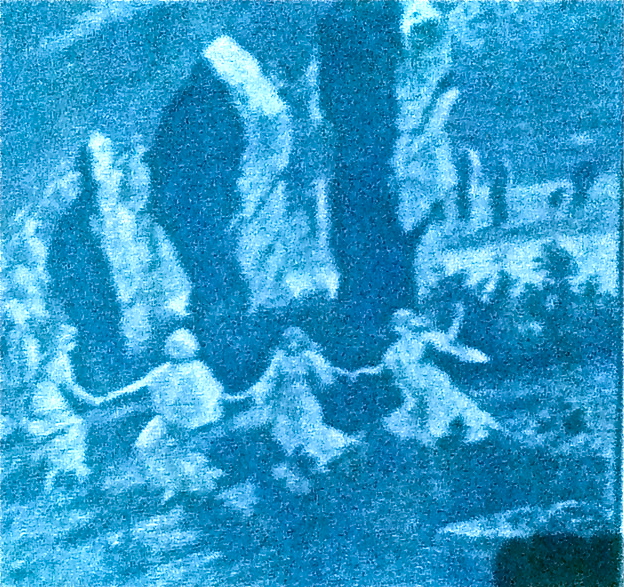
It was a time before Babel, a time of women’s councils and maidens dancing in meadows under a moonlit sky.
It was a time when the terms “witch” and “old hag” conveyed great honor, before the word “woman” reflected the modern belief that “women” are an adjunct of man.
It was a time when astronomers called ‘The Watchers’ roamed the land. The Watchers possessed a knowledge of physics and mathematics beyond that of today and used technology lost to us now. They moved twenty-ton stones like they were feathers, harnessed anti-magnetism, had flying suits, and built watertight stone structures aligned with great precision to the cosmos.
It was the time recorded in the Dead Sea Scrolls when Enoch was taken to Newgrange to learn how to reconstruct a crucial calendar that might be destroyed if the incoming comet should hit earth at the Bend in the Boinne.
The year is 3150 BCE, and the cluster of observatories at the Bend in the Boinne are fully operational. This advanced community, rich in mythology and folklore, teem with celebration, but the day my story begins, trouble lurks in paradise.


